



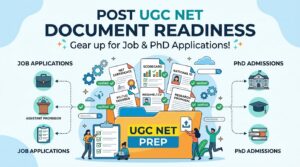
UGC NET After Qualification is the stage when candidates need to decide what to do next. The next step depends on their result category and career plans. Some candidates can apply for Assistant Professor posts, while others may pursue a PhD or research through JRF. Clearing UGC NET does not guarantee a job or confirm PhD admission. Candidates must apply for suitable opportunities and follow the required selection or admission process.
What Happens After Qualifying UGC NET?
After the UGC NET result is declared, candidates should first check their qualification category.
There are three broad categories:
| UGC NET Qualification Category | Main Opportunity |
| JRF + Assistant Professor + PhD | JRF, Assistant Professor and eligible PhD opportunities |
| Assistant Professor + PhD | Assistant Professor and eligible PhD opportunities |
| PhD Only | PhD admission through the applicable process |
The next step depends on the category mentioned in the candidate’s result or certificate.
UGC NET After Qualification for Assistant Professor
Candidates who qualify for Assistant Professor eligibility can start looking for relevant teaching vacancies.
They need to:
- Check university and college recruitment notifications.
- Find vacancies matching their subject and qualification.
- Check the eligibility conditions carefully.
- Submit the application before the deadline.
- Attend the selection process if shortlisted.
- Complete the joining process after final selection.
UGC NET qualification provides eligibility, but it does not give a direct Assistant Professor appointment.
The final recruitment is conducted by the concerned university, college or other recruiting institution according to its applicable rules.
UGC NET After Qualification After JRF
Candidates who qualify for Junior Research Fellowship (JRF) can explore research and PhD opportunities.
A JRF-qualified candidate can look for suitable PhD or research opportunities in universities and other eligible institutions.
The candidate should check:
- PhD admission notifications
- Research vacancies
- University requirements
- JRF joining conditions
- Fellowship-related rules
- Subject-specific research opportunities
JRF is particularly useful for candidates who want to build a career in academic research.
UGC NET After Qualification for PhD Admission
Candidates who qualify in the category applicable to PhD admission can use their NET qualification as per the admission rules of the concerned university or institution.
- The admission process is not identical across all universities. Candidates may have to participate in an interview or other admission stages prescribed by the institution.
- Therefore, after qualifying UGC NET, candidates should check the official PhD admission notification of the university where they want to apply.
UGC NET After Qualification Guarantee a Job
UGC NET qualification does not guarantee a job. UGC NET is an eligibility examination that can help candidates become eligible for specific career opportunities in teaching, research or PhD admission, depending on the qualification category.
- For example, a candidate who qualifies for the Assistant Professor category can apply for relevant teaching vacancies. However, simply qualifying UGC NET does not mean that the candidate will automatically get an appointment. The candidate must find a suitable vacancy, submit the application and complete the selection process followed by the university or institution.
- Similarly, candidates who qualify for JRF can use the fellowship for research or PhD-related opportunities, subject to the applicable rules. Candidates qualifying for PhD admission also need to complete the admission process of the concerned university or institution.
Therefore, candidates should remember:
UGC NET Qualification ≠ Direct Job
UGC NET can make a candidate eligible for certain opportunities, but the final job or admission depends on the recruitment or admission process.

Can I Apply for Assistant Professor After UGC NET?
Candidates can apply for Assistant Professor vacancies after qualifying UGC NET for the applicable Assistant Professor category, provided they also meet the other eligibility requirements mentioned in the recruitment notification.
After qualifying UGC NET, candidates should regularly check vacancies released by universities, colleges and other higher education institutions. Different institutions may have different recruitment procedures, so candidates should not apply only on the basis of their NET qualification.
Before applying for an Assistant Professor post, check:
- Whether UGC NET is prescribed for the advertised post
- Whether your UGC NET subject matches the required subject
- The educational qualification required for the post
- Category-specific eligibility conditions, where applicable
- The application deadline
- The selection process mentioned in the notification
The recruitment process may include shortlisting, academic presentation or demo lecture, interview, document verification and final selection, depending on the institution. So, qualifying UGC NET is an important step towards an academic career, but candidates still need to apply for suitable vacancies and complete the required selection process.
Can I Do a PhD After UGC NET?
UGC NET can provide a route to PhD admission for candidates who qualify in the applicable category.
- The current UGC NET framework includes categories related to JRF with Assistant Professor eligibility, Assistant Professor with PhD admission, and PhD admission only. The exact opportunity depends on the category in which the candidate qualifies.
- Candidates who qualify for JRF can pursue research or a PhD with the support of the fellowship, subject to the applicable fellowship rules, university requirements and joining conditions. JRF can therefore be a useful option for candidates who want to build a long-term career in research or higher education.
- Candidates should check the PhD admission rules of the university before applying because the admission procedure, eligibility conditions and selection process can vary between institutions.
After qualifying UGC NET, candidates interested in research should check:
- PhD admission notifications
- University-specific eligibility requirements
- Research area or supervisor requirements
- Admission dates
- Selection procedure
- Fellowship or JRF conditions, where applicable
Therefore, UGC NET can open a pathway towards PhD, research and higher education, but candidates need to complete the relevant university or research admission process.
Can I Apply for Jobs Other Than Assistant Professor?
UGC NET-qualified candidates can also explore research and academic roles depending on their qualifications and the requirements of individual organisations.
Possible areas include:
- Research projects
- Research Assistant roles
- Research Associate positions
- Academic content development
- Subject matter expert roles
- Teaching and education-related work
- Policy and social research
UGC NET is not a mandatory qualification for every such position, so candidates should check the individual job notification.
UGC NET Qualification to Keep Documents
Candidates should keep their important academic and NET-related documents ready.
These may include:
- UGC NET certificate or qualification document
- Scorecard
- Master’s degree certificate
- Marksheets
- Bachelor’s degree documents
- Category certificate, if applicable
- PwD certificate, if applicable
- Identity proof
- Research or experience documents, where required
The exact documents required depend on the recruitment or admission process.
UGC NET After Qualification Career Path
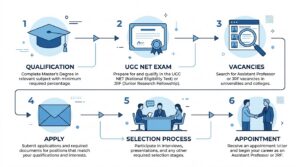
UGC NET is conducted by the National Testing Agency (NTA) on behalf of the University Grants Commission (UGC). The examination can help candidates become eligible for different academic opportunities, depending on the qualification category in which they qualify.
The current UGC NET framework has three broad qualification categories:
- JRF and Assistant Professor
- Assistant Professor and PhD admission
- PhD admission only
Each category offers a different career pathway. Candidates who qualify for JRF and Assistant Professor can pursue research with the JRF fellowship while also being eligible for relevant Assistant Professor opportunities.
- Candidates qualifying for Assistant Professor and PhD admission can apply for teaching positions where NET is prescribed and can also explore PhD admission opportunities. The PhD admission only category is meant for candidates who qualify for PhD admission under the applicable rules.
- Candidates who qualify only for Assistant Professor eligibility are not eligible for the JRF fellowship. Therefore, students should check their qualification category carefully after the UGC NET result.
- The career scope of UGC NET is not limited to one job. Candidates can build careers in teaching, research, higher education, PhD, academic content, EdTech, selected PSU opportunities and other education-related roles. Some organisations may also use UGC NET data or scores for specific recruitment processes.
UGC NET After Qualification Career Opportunities After Exam
After clearing UGC NET, the next career step depends on the candidate’s qualification category, subject, skills and long-term career goal.
- For candidates interested in teaching, Assistant Professor is one of the main career options. They can look for relevant vacancies in universities, colleges and other higher education institutions where UGC NET is prescribed.
- Candidates interested in research can explore JRF, PhD admission, research projects and research-related positions. Those who qualify for JRF can also receive fellowship support according to the applicable rules.
- UGC NET-qualified candidates can also explore opportunities outside traditional teaching and research. These may include EdTech, academic content, Subject Matter Expert roles, curriculum development, corporate training, consulting and selected PSU recruitment.
The following table gives a quick overview of common career-related questions after UGC NET:
| Career Question | What It Means |
| What jobs can I get after UGC NET? | Candidates can explore Assistant Professor, JRF, research roles, selected PSU opportunities, EdTech, academic content, training, consulting and PhD-related opportunities. |
| What is the salary after UGC NET? | Salary depends on the job, organisation, experience, location and recruitment rules. UGC NET itself does not provide a fixed salary. |
| What is the next step after clearing UGC NET? | Candidates can apply for Assistant Professor vacancies, explore PhD admission, pursue JRF or research opportunities, or check relevant PSU recruitment. |
| Does clearing UGC NET guarantee a job? | No. UGC NET provides eligibility for specified purposes. Final selection depends on the recruitment or admission process. |
| What should I do after clearing UGC NET for Assistant Professor? | Candidates should start checking relevant teaching vacancies in universities, colleges and other higher education institutions. |
| What can I do after qualifying UGC NET JRF? | JRF-qualified candidates can pursue research or PhD opportunities with fellowship support, subject to the applicable rules. |
| Can UGC NET help in a career outside teaching? | Yes. Candidates can explore EdTech, academic content, curriculum development, training, consulting, research support and other related roles. |
| Can UGC NET-qualified candidates apply for PSU jobs? | Some PSUs or organisations may use UGC NET data or scores for specific recruitment processes. Candidates must check the latest notification for each post. |
The important point is that UGC NET qualification does not automatically lead to a job. Candidates need to identify the career path that matches their qualification category, apply for suitable opportunities and meet the requirements of the concerned organisation.
UGC NET After Qualification Do Immediately After Result
Candidates can follow these simple steps:
- Check your result category
Find out whether you have qualified for JRF, Assistant Professor and PhD, Assistant Professor and PhD, or PhD only. - Keep your documents ready
Download and safely store your result and qualification-related documents. - Decide your next goal
Choose between teaching, research or PhD based on your qualification. - Start checking official notifications
Look for Assistant Professor vacancies, PhD admissions or research opportunities. - Apply before the deadline
Do not wait until the last date to submit applications.
UGC NET After Qualification Certificate
The UGC NET Certificate is an official document issued to candidates who qualify for the relevant UGC NET category. It confirms the qualification obtained through the examination. The category depends on the candidate’s result.
The current UGCNET framework provides three broad result categories:
| Category | Eligibility |
| JRF + Assistant Professor + PhD | JRF, Assistant Professor eligibility and PhD admission |
| Assistant Professor + PhD | Assistant Professor eligibility and PhD admission, but no JRF |
| PhD Only | PhD admission only |
NTA states that these categories depend on the candidate’s aggregate performance in Paper 1 and Paper 2.
UGC NET After Qualification Certificate Download Link
Candidates can access the certificate service from the official UGC NET website.
Official website: UGCNET Official Website
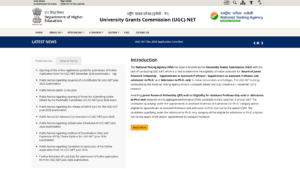
The website currently lists Issuance of e Certificates for UGC NET June Examination under its Candidate Activity section.
UGC NET After Qualification Download Certificate
Candidates who are eligible for the certificate can follow these basic steps:
- Visit the official UGC NET website.
- Find the e Certificate link for UGC NET June .
- Open the certificate login page.
- Enter the required login details.
- Submit the information.
- Check the certificate displayed on the screen.
- Download the PDF.
- Keep a copy safely for future use.
Before downloading, check the candidate name, subject and qualification category carefully.

UGC NET After Qualification Certificate
The UGC NET certificate is given to candidates who qualify for a recognised UGC NET result category. However, qualifying does not depend only on crossing the minimum marks. NTA also considers the prescribed subject-wise and category-wise qualification process. Candidates who qualify UGC NET under the applicable result category can receive the certificate. The qualification may relate to:
- Assistant Professor eligibility
- Junior Research Fellowship (JRF)
- PhD admission
- Assistant Professor + PhD admission
The exact category depends on the candidate’s UGC NET result.
UGC NET After Qualification Score card and Certificate
The UGC NET scorecard and certificate serve different purposes.
| Scorecard | Certificate |
| Shows exam performance | Confirms the qualification |
| Contains marks and other result details | Shows the applicable qualification category |
| Helps candidates check their result | Can be used as qualification proof |
| Part of the result process | Issued to candidates who qualify |
Candidates should keep both documents safely for future use.
UGC NET After Qualification Certificate Details
The certificate generally includes important details related to the candidate and the qualification. These may include:
- Candidate’s name
- UGC NET session
- Subject
- Qualification category
- JRF qualification, if applicable
- Assistant Professor eligibility, if applicable
- PhD admission category, if applicable
- Certificate or reference details
Candidates should check these details after receiving the certificate. If there is an important mistake, they should contact the concerned authority instead of editing the certificate themselves.
UGC NET Certificate Validity After Qualification
The validity of the UGC NET certificate depends on the qualification category. This is one of the most important points candidates should understand.
Assistant Professor Eligibility
- the UGC NET certificate for eligibility for Assistant Professor/Lectureship is valid forever.
- Therefore, a candidate who has qualified for Assistant Professor eligibility does not need to reappear for UGC NET only because the certificate’s validity has ended.
- However, UGC NET qualification does not by itself guarantee appointment. Recruitment depends on vacancies and the rules applicable to the concerned institution.
JRF Validity
JRF follows separate fellowship rules.
- The Assistant Professor certificate’s lifetime validity should not be confused with the validity or joining conditions of JRF.
- Candidates who qualify for JRF should check the applicable JRF award letter and current fellowship rules for the time limits and joining requirements.
PhD Admission Validity
PhD-related eligibility also has separate rules.
- Under the June UGCNET framework, candidates qualifying under the Assistant Professor + PhD or PhD Only categories can use their NET performance for PhD admission according to the applicable university and NTA rules.
- For these PhD admission categories, the June Information Bulletin specifies that the NET marks are valid for one year from the date of result declaration.
- So, PhD admission validity should not be treated as lifetime validity of the UGC NET certificate.
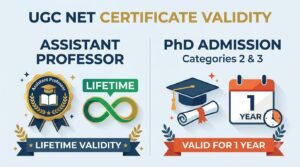
UGC NET Certificate Valid for Lifetime
There is no single answer for every UGC NET category.
For Assistant Professor/Lectureship eligibility, UGC clearly states that the certificate is valid forever.
JRF and PhD-related benefits have separate rules.
A simple way to remember it is:
- Assistant Professor, eligibility, Lifetime validity
- JRF Separate, fellowship rules
- PhD admission, Separate admission, validity rules
Conclusion
After qualifying UGC NET, the next step depends on the candidate’s qualification category and career goal. Candidates may apply for Assistant Professor vacancies, pursue a PhD, take up research opportunities or use JRF for research, depending on their qualification.
The most important thing to remember is that UGC NET qualification is not a direct job appointment. Candidates need to complete the relevant recruitment or admission process after qualifying the examination.