The VISION JRF 2026 (June Session) is one of the most anticipated exams for research aspirants across India. If you are planning to pursue a career in research or aim to secure the prestigious Junior Research Fellowship (JRF), this guide will help you understand everything about the June 2026 cycle — eligibility, exam pattern, preparation strategy, and expert tips.
What is JRF?
The Junior Research Fellowship (JRF) is awarded to candidates who qualify national-level eligibility tests such as:
-
UGC NET
-
CSIR NET
These exams are conducted to determine eligibility for Assistant Professor and to award JRF for pursuing research (Ph.D.) in Indian universities and colleges.
VISION JRF 2026 (June) – Important Highlights
-
Exam Session: June 2026
-
Mode of Examination: Computer-Based Test (CBT)
-
Conducting Body: National Testing Agency (for UGC NET)
-
Frequency: Twice a year (June & December)
-
Validity of JRF: 4–5 years (as per current norms)
Note: Official notification is expected a few months before the exam date.
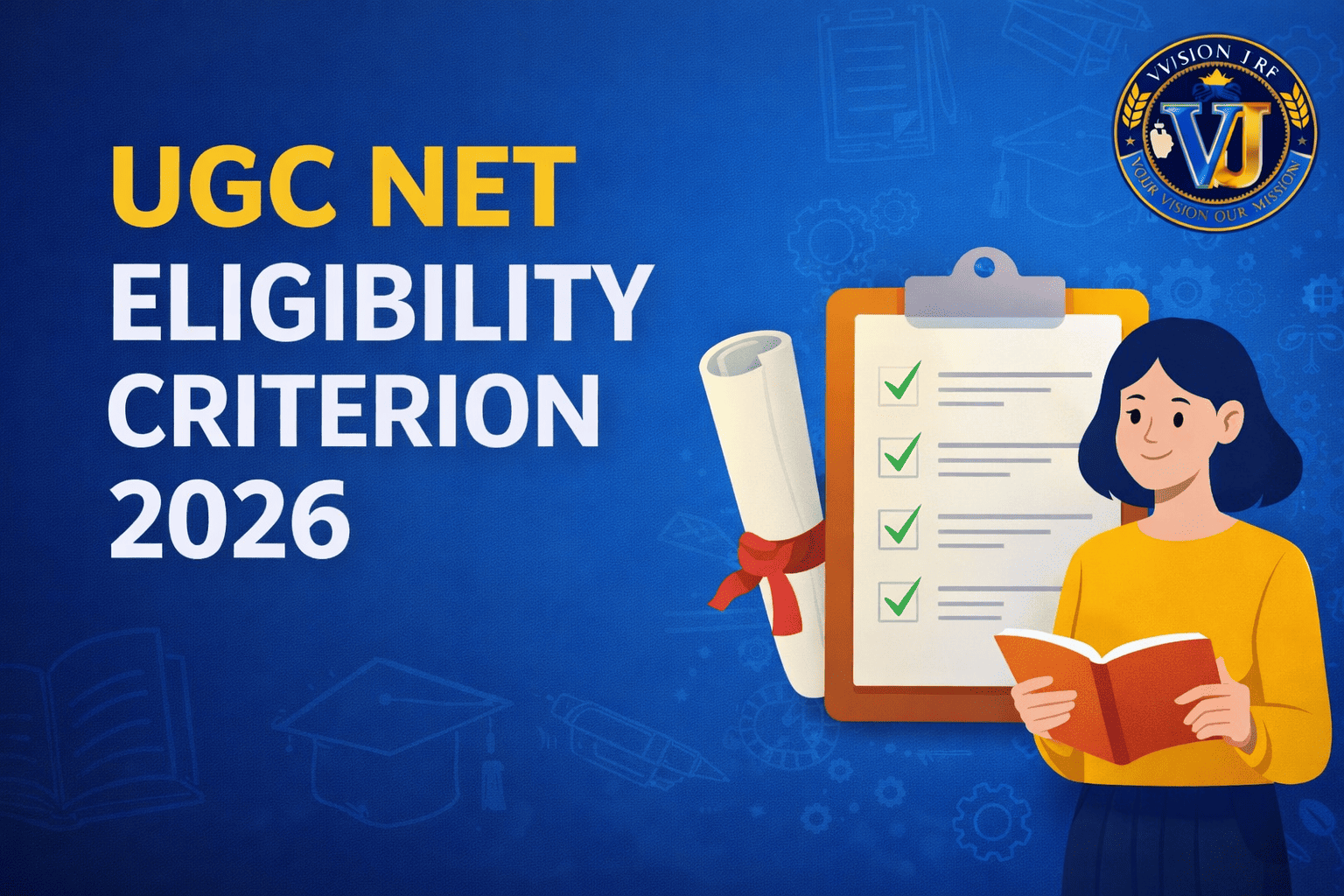
✅ Eligibility Criteria
1️⃣ Educational Qualification
-
Master’s degree with at least 55% marks (50% for reserved categories).
-
Final-year postgraduate students can also apply.
2️⃣ Age Limit for JRF
-
Maximum age: 30 years (age relaxation for reserved categories as per government rules).
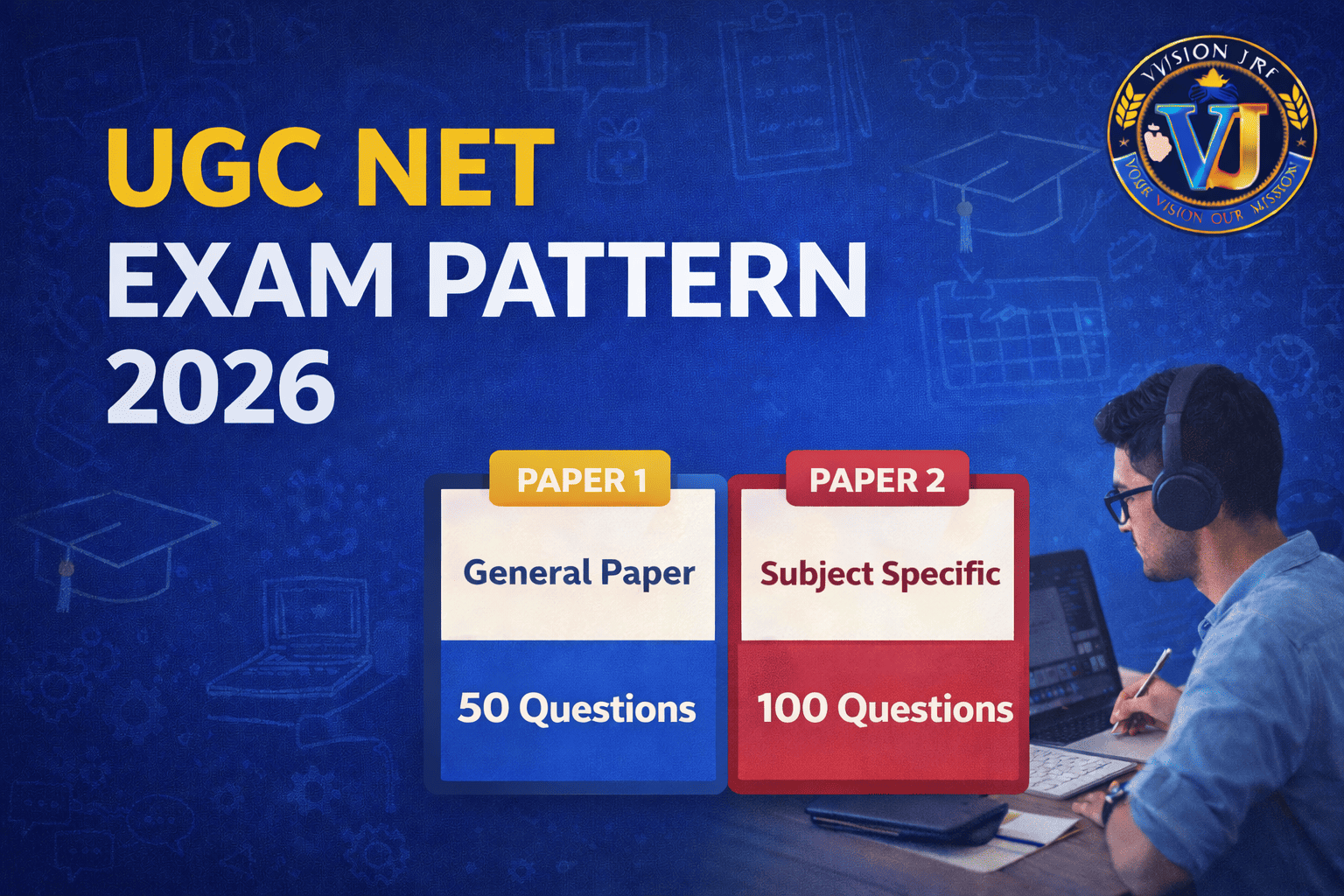
Exam Pattern (UGC NET – JRF)
The exam consists of two papers conducted in a single session:
🔹 Paper 1 (General Paper)
-
Teaching & Research Aptitude
-
50 questions
-
100 marks
🔹 Paper 2 (Subject-Specific)
-
Based on candidate’s chosen subject
-
100 questions
-
200 marks
Total Marks: 300
Duration: 3 hours
Syllabus Overview
Paper 1 Includes:
-
Teaching Aptitude
-
Research Aptitude
-
Logical Reasoning
-
Data Interpretation
-
Communication
-
Higher Education System
Paper 2:
-
Based entirely on your selected postgraduate subject (e.g., Commerce, English, Political Science, History, etc.)
Smart Preparation Strategy for VISION JRF 2026
✔️ 1. Understand the Syllabus Thoroughly
Break the syllabus into smaller units and create a weekly plan.
✔️ 2. Practice Previous Year Papers
Solve at least 10 years’ previous question papers to understand trends.
✔️ 3. Focus on Paper 1 Scoring Topics
Reasoning, Data Interpretation, and Research Aptitude can significantly boost your score.
✔️ 4. Mock Tests & Time Management
Attempt full-length mock tests regularly to improve speed and accuracy.
✔️ 5. Revision is Key
Maintain short notes and revise consistently.
Why Aim for JRF?
-
Monthly fellowship (financial support during Ph.D.)
-
Opportunity to pursue research in top Indian universities
-
Strong academic and research career foundation
-
Eligibility for Assistant Professor
Expected Notification & Application Timeline (Tentative)
| Event | Expected Date |
|---|---|
| Notification Release | March–April 2026 |
| Application Start | April 2026 |
| Exam Date | June 2026 |
| Result Declaration | July–August 2026 |
(Dates subject to official announcement.)
Final Words
The VISION JRF 2026 (June Exam) is a golden opportunity for aspiring researchers. With a disciplined study plan, strategic preparation, and regular practice, cracking JRF is absolutely achievable.
Start early, stay consistent, and believe in your preparation journey.