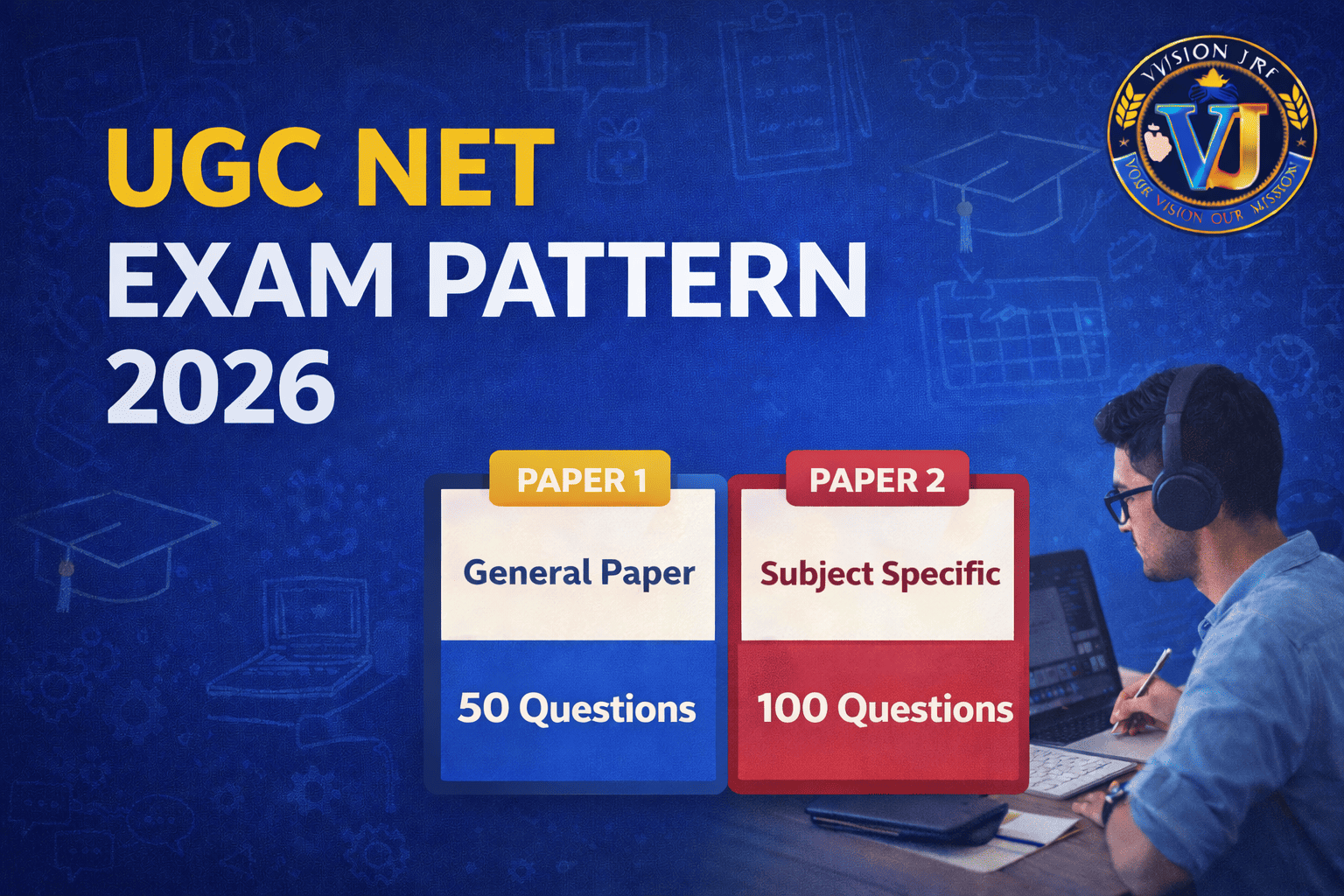
UGC NET Eligibility Criterion 2026 for JRF, Assistant Professor
UGC NET Eligibility Criterion 2026 is the most important aspect of UGC NET that the candidates must understand before applying for the examination. Without meeting the UGC NET Eligibility Criterion, the candidates would not be able to apply for the examination. The UGC NET exam is conducted by the National Testing Agency (NTA), and the UGC NET (University Grants Commission National Eligibility Test) determines the candidate's eligibility for Assistant Professor and Junior Research Fellowship (JRF) in various Indian universities and colleges.
Learn more about the UGC NET Eligibility Criterion 2026 in the article and understand the eligibility, age limits, and reservation policies for JRF and Assistant Professor.
UGC NET Eligibility Criterion 2026 Overview
To be able to apply for the National Eligibility Test, the candidates are required to meet some basic UGC NET Eligibility Criterion 2026. Understanding these UGC NET Eligibility Criterion is the first step in the UGC NET journey. Here is the overview of the UGC NET Eligibility Criterion 2026:
|
|
|
|
|
|
|
|
|
|
|
|
|
|
|
|
|
|
|
|
|
UGC NET Qualification Criteria 2026
The first requirement under the UGC NET Eligibility Criterion 2026 is educational qualification. To apply for the UGC NET 2026 examination, the candidates must have these specific educational requirements. The UGC NET Qualification Criteria are as follows:
|
|
|
|
|
|
|
|
|
|
|
|
|
|
|
UGC NET Age Limit 2026
The next important factor in the UGC NET Eligibility Criterion 2026 is the age limit. The UGC NET has different age limits for candidates applying for Assistant Professor and JRF. Understanding the UGC NET Age Limit is crucial, as even a day more or less can prevent you from applying for the exam:
- JRF (Junior Research Fellowship): The upper age limit is 30 years as of the first day of the examination month. The relaxation in age based on different categories is provided in the table below:
|
|
|
|
|
|
|
|
|
|
|
|
|
|
|
|
|
|
- Assistant Professor: In case of Assistant Professor positions through the UGC NET exam, there is no upper age limit.
UGC NET Eligibility for JRF 2026
The UGC NET Eligibility Criterion 2026 for the Junior Research Fellowship (JRF) exam requires candidates to have some specific academic qualifications and age limits. To meet the UGC NET eligibility for JRF, the candidates must:
- Be under 30 years of age (with applicable relaxations).
- Hold a Master’s degree with the required percentage.
- Qualify both Paper 1 and Paper 2 of the UGC NET exam in the same session.
The candidates clearing all the above conditions are then eligible to receive Junior Research Fellowships, which eventually enable them to pursue a Ph.D. or research work with financial assistance.
For JRF, there is no limit to the number of attempts as long as the candidates meet the age criteria. And the subject chosen for the UGC NET Paper 2 must also align with their post-graduation qualification.
UGC NET Eligibility for Assistant Professor 2026
The UGC NET Eligibility Criterion 2026 for Assistant Professor mainly focuses on the academic qualifications of the candidates. For the UGC NET eligibility for Assistant Professor, the candidates must:
- Have secured the minimum qualifying marks (55% for General, 50% for reserved categories) in a postgraduate course.
- Clear both Paper 1 and Paper 2 of the UGC NET exam.
- There is no age limit for this post, making it accessible for all eligible candidates.
For the Assistant Professor post, there is no limit to the number of attempts by the candidates. For the Majority of candidates, clearing the UGC NET exam is mandatory for Assistant Professor eligibility. However, certain candidates are exempted from appearing for the UGC NET exam:
- SET (State Eligibility Test) Qualifiers: Qualified before June 2002.
- PhD Holders: Completion before July 2009, awarded as per the UGC regulations.
- JRF Qualifiers: Qualified before 1989.
UGC NET Reservation Policy 2026
The UGC NET Eligibility Criterion 2026 includes a detailed reservation policy that is implemented by the Government of India. This UGC NET reservation policy is applicable to all the Central Universities as well as the deemed institutions. The current reservation distribution under the UGC NET Eligibility Criterion 2026 is as follows:
|
|
|
|
|
|
|
|
|
|
|
|
|
|
|
|
|
|
The candidates seeking a reservation must make sure that they possess all the required documents. They must carefully select the correct category when filling out the UGC NET application form and submit the documents when asked.
Conclusion
Understanding the UGC NET Eligibility Criterion 2026 is crucial for candidates before filling out the UGC NET application form. The aspirants should verify if they meet the required UGC NET Eligibility Criterion 2026 based on their educational qualifications, age limit, and category-based relaxations to avoid disqualification later on. With clear knowledge of the UGC NET Eligibility Criterion for JRF and Assistant Professor, the candidates can confidently proceed with their UGC NET preparation.
UGC NET Eligibility Criterion 2026 FAQs
Q1. What is the minimum qualification required based on the UGC NET Eligibility Criterion 2026?
The candidates must own a Master’s degree with at least 55% marks for General and 50% for reserved categories.
Q2. What is the UGC NET Age Limit for JRF?
Based on the UGC NET Eligibility Criterion 2026, the upper age limit for JRF is 30 years, with up to 5 years of relaxation for reserved categories and women candidates.
Q3. Is there an age limit for UGC NET Assistant Professor?
No, there is no upper age limit for applying for the Assistant Professor post through UGC NET.
Q4. Can final-year postgraduate students apply according to the UGC NET Eligibility Criterion 2026?
Yes, final-year students can apply provisionally but must complete their degree within two years from the date of result declaration.
Q5. Based on the UGC NET Eligibility Criterion 2026, what is the reservation policy?
UGC NET follows a government-approved reservation system, including 27% for OBC-NCL, 15% for SC, 7.5% for ST, 10% for EWS, and 5% horizontal for PwD candidates.