



The UGC NET exam is one of the major national-level examinations for candidates who want to build a career in teaching, research and higher education. The exam is conducted by the National Testing Agency (NTA) on behalf of the University Grants Commission (UGC). UGC NET is not only about becoming eligible for Assistant Professor. Depending on the category in which a candidate qualifies, the exam can also provide eligibility for Junior Research Fellowship (JRF) and admission to PhD programmes.
UGC NET Notification
The UGC NET Notification contains all the important information about the examination. It tells candidates about eligibility, application dates, examination schedule, syllabus, exam pattern, application process, examination centres, admit card and other important instructions.
The National Testing Agency releases the examination-related notices and updates through the official UGC NET website. Candidates should always check the latest notification instead of depending only on information shared on social media, YouTube or other websites.
What should you check in the notification?
Before applying for the exam, carefully check:
- Eligibility criteria
- Educational qualification
- Age limit for JRF
- Application dates
- Application fee
- Subject list
- Exam pattern
- Syllabus
- Examination mode
- Important instructions
- Admit card information
- Examination dates
- Result and answer-key process
A simple habit can save you from many mistakes read the latest official notification once before filling the application form.
UGC NET Notification Eligibility Criteria
Eligibility is one of the first things you should check before starting your preparation.
- As per the recent NTA information bulletin, candidates belonging to the General/Unreserved/General-EWS category generally need at least 55% marks in a Master’s degree or equivalent examination from a recognised university or institution. Candidates belonging to OBC-NCL, SC, ST, PwD and Third Gender categories generally need at least 50% marks.
- Candidates who are appearing in the final year of their Master’s degree or whose result is awaited may also be allowed to apply provisionally, subject to the conditions given in the applicable notification.
Is there an age limit?
- The age rule depends on the purpose for which you are appearing.
- For JRF, the recent NTA bulletin specifies an upper age limit, along with applicable relaxations for certain categories. For Assistant Professor and PhD admission through UGC NET, there is no upper age limit in the recent rules.
- Because age limits and relaxations can change through official notifications, candidates should always check the notification applicable to their examination cycle.
Which subject should you choose?
- Candidates are generally advised to appear in the subject of their postgraduate qualification. If the postgraduate subject is not included in the available NET subject list, the applicable rules may allow a related subject.
- So, do not select a subject randomly. Check the official subject list and eligibility conditions before submitting the form.
UGC NET Notification Exam Pattern
Understanding the exam pattern is important because it helps you plan your preparation from the beginning.
UGC NET is conducted in Computer Based Test (CBT) mode. The examination has two papers:
| Paper | Questions | Marks | Main Focus |
| Paper 1 | 50 | 100 | Teaching and Research Aptitude |
| Paper 2 | 100 | 200 | Subject selected by the candidate |
| Total | 150 | 300 | Paper 1 + Paper 2 |
Both papers consist of objective-type multiple-choice questions. The recent examination scheme provides 180 minutes for both papers together, without a break. All questions are compulsory.
Paper 1
Paper 1 is common for all candidates.
It tests areas such as:
- Teaching aptitude
- Research aptitude
- Reading comprehension
- Communication
- Reasoning ability
- Data interpretation
- Information and Communication Technology
- People and Environment
- Higher Education System
- Other relevant areas mentioned in the syllabus
Paper 2
Paper 2 is based on the subject selected by the candidate.
For example, if your selected subject is History, Paper 2 will test your knowledge of History according to the prescribed UGC NET syllabus.
Is there negative marking?
- The recent UGC NET examination scheme states that there is no negative marking for incorrect answers. Each correct answer carries two marks.
- This makes time management particularly important. You should try to use the full examination time carefully instead of leaving large numbers of questions unanswered.
UGC NET Notification Syllabus
The UGC NET syllabus is divided into two parts: Paper 1 and Paper 2. Paper 1 is common to all candidates, while Paper 2 depends on the subject selected by the candidate. NTA’s information bulletin directs candidates to the UGC website for the detailed syllabus of NET subjects.
How should you understand the syllabus?
Do not simply download the syllabus and keep it in your study folder.
Use it as a checklist.
For example, suppose you are preparing for History. Instead of saying:
I have to study History.
Break it into smaller areas:
- Ancient Indian History
- Medieval Indian History
- Modern Indian History
- Historiography
- World History
- Indian National Movement
- Post-Independence India
- Culture and other prescribed areas
The exact units depend on the official syllabus of your subject.
Why is the syllabus important?
Many students spend months studying books but later realise that they have spent too much time on topics that have limited relevance to the examination. The syllabus gives you a clear boundary. Your preparation should start with the syllabus, not with a random book.
UGC NET Notification Application Form
The UGC NET application process is conducted online through the official NTA portal.
In a recent application cycle, candidates were required to register using their own email ID and mobile number, complete the online application form, upload the required images and pay the examination fee online. After successful payment, candidates were advised to download and keep the Confirmation Page for future reference.
Basic application process
The process generally involves:
Step 1: Online registration
Create your registration using your own email ID and mobile number.
Step 2: Fill in the application form
Enter details such as:
- Personal information
- Educational qualification
- Category
- Subject
- Examination city preferences
- Other required information
Step 3: Upload documents
Upload the required photograph, signature and other documents according to the instructions given in the notification.
Step 4: Pay the examination fee
Pay the applicable fee through the available online payment methods.
Step 5: Download the Confirmation Page
After successful submission and payment, save the Confirmation Page for future reference.

Common application mistakes
Before submitting the form, check:
- Name spelling
- Date of birth
- Category
- Educational qualification
- Subject selection
- Photograph
- Signature
- Examination city choices
- Mobile number
- Email ID
A small mistake in the application form can create unnecessary problems later.
UGC NET Notification Important Dates
UGC NET is generally conducted twice a year, with examination cycles associated with June and December. The exact schedule, however, should always be checked in the latest official notification.
Important dates usually include:
- Notification release
- Application form start date
- Last date to apply
- Last date for fee payment
- Correction window
- Examination city information
- Admit card release
- Examination date
- Answer key
- Result
- Certificate/JRF-related updates
Do not rely on an old date from a previous examination cycle.
For example, if you are preparing for the next UGC NET examination, check the official NTA website when the new notification is released.

UGC NET Notification Admit Card
The UGC NET Admit Card is an important document for appearing in the examination.
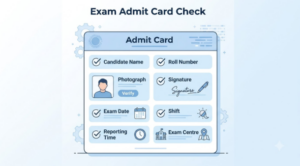
NTA releases admit-card-related information through its official website. Candidates should download the admit card and carefully check details such as their name, roll number, examination date, shift, centre and other information mentioned on it.
What should you check on the admit card?
Check:
- Candidate name
- Roll number
- Photograph
- Signature
- Examination date
- Examination shift
- Reporting time
- Examination centre
- Other instructions
If there is an issue with the admit card or you are unable to download it, follow the contact instructions provided by NTA for that examination cycle.
Also remember that the city intimation information and admit card are not necessarily the same thing. Read the notice carefully to understand what document has been released.
UGC NET December Notification 2026 Release Date
The official release date has not been announced by NTA.
| Event | Status |
| UGC NET December Notification 2026 | To be announced |
| Application Form | To be announced |
| Last Date to Apply | To be announced |
| Correction Window | To be announced |
| Exam City Intimation | To be announced |
| Admit Card | To be announced |
| UGC NET December Exam | To be announced |
| Answer Key | To be announced |
| Result | To be announced |
Candidates should rely on the official UGC-NET website and NTA notices for confirmation. The current official portal does not list a December 2026 notification.
Expected Timeline
- Notification Release: First week of October 2026
- Application Window: October to November 2026
- Correction Window: November 2026
- Exam Dates: Late December 2026 to early January 2027
These dates are expected, so candidates should wait for the official UGC NET notification for the confirmed schedule.
UGC NET December 2025 Exam Date Previous Year Example
The UGC NET December 2025 cycle gives a useful example of the application and examination timeline. The dates for December 2026 may be different and will be confirmed by NTA.
| Event | UGC NET December 2025 |
| Application Start Date | October 7, 2025 |
| Last Date to Apply & Pay Fee | November 7, 2025, up to 11:50 PM |
| Application Correction Window | November 10–12, 2025 |
| Examination Dates | December 31, 2025 – January 7, 2026 |
Note: These dates are from the previous December 2025 cycle and are given only as an example. Candidates should check the official NTA notification for the confirmed UGC NET December 2026 dates.
UGC NET December Nationality Eligibility 2026
Nationality is also an important part of UGC NET eligibility. Candidates must follow the nationality and other eligibility rules prescribed by NTA for the examination.
| Nationality | Eligibility |
| Indian Nationals | Indian citizens can apply for the UGC NET exam if they meet the required educational and other eligibility conditions. |
| Foreign Nationals | Foreign nationals should check the latest NTA rules because UGC NET eligibility and Ph.D. admission rules may differ for them. |
Note: Candidates should check the latest official NTA notification for the exact nationality requirements applicable to UGC NET 2026.

UGC NET December Eligibility 2026 Attempt Limit
There is no limit on the number of attempts for the UGC NET exam. Candidates can appear for the exam multiple times as long as they meet the required eligibility conditions.
- General Category: There is no limit on the number of UGC NET attempts.
- Reserved Categories: OBC-NCL, SC, ST, PwD/PwBD and Third Gender candidates also have no fixed attempt limit.
- Assistant Professor: Candidates can appear for UGC NET any number of times, subject to the eligibility rules.
- JRF: There is no fixed attempt limit, but candidates must meet the prescribed age limit for JRF when applying.
Therefore, candidates can take the UGC NET exam multiple times if they continue to meet the applicable eligibility requirements.
UGC NET Exam Pattern 2026
The latest official UGC-NET pattern consists of two papers:
| Paper | Questions | Marks | Focus |
| Paper 1 | 50 | 100 | Teaching/research aptitude |
| Paper 2 | 100 | 200 | Subject-specific knowledge |
| Total | 150 | 300 | — |
The examination is conducted in Computer Based Test (CBT) mode.
The total examination duration is 3 hours, and there is no break between Paper 1 and Paper 2. All questions are compulsory.
UGC NET Notification Preparation Strategy
This is where many students need the most help.
You do not need to study for 12–14 hours every day just because someone else claims to do so. What matters more is having a realistic timetable and following it consistently.
Step 1: Understand the syllabus
Start by downloading the latest syllabus for Paper 1 and your Paper 2 subject.
Read every unit carefully.
Mark topics as:
- Strong
- Average
- Weak
Now you know where you stand.
Step 2: Make Paper 2 your main subject focus
Paper 2 carries 200 marks, while Paper 1 carries 100 marks. Therefore, your preparation plan should give enough time to your subject while maintaining regular Paper 1 practice.
For example, if you study for four hours a day, you could divide your time according to your strengths and weaknesses rather than blindly following a fixed formula.
Step 3: Study from limited resources
Do not collect ten books for one topic.
A better approach is:
One main source + notes + previous-year questions + mock tests.
Suppose you are studying a topic such as the French Revolution. Read it from your main source, make short notes, solve relevant questions and then revise.
This creates a complete study cycle.
Step 4: Use previous-year questions
Previous-year questions help you understand:
- What type of questions are asked
- Which areas are repeatedly tested
- How questions are framed
- Your weak topics
- Your actual preparation level
Do not use PYQs only after completing the entire syllabus. Start solving them unit by unit.
Step 5: Revise regularly
A simple revision cycle can work well:
First Revision: Within a few days
Second Revision: After a few weeks
Final Revision: Before the examination
The exact timing can be adjusted according to your preparation.
Step 6: Take mock tests
Mock tests help you practise sitting for the full examination duration.
After every mock test, do not only look at your score.
Ask:
- Which questions did I get wrong?
- Why did I get them wrong?
- Was the problem knowledge, confusion or time management?
- Which topics need revision?
This analysis is often more useful than simply taking another test.
Can you prepare for UGC NET without coaching?
Yes. Coaching is not compulsory for appearing in UGC NET. A student can prepare independently using the official syllabus, standard books, previous-year questions, notes and mock tests. The important thing is to have a clear plan.
If you are studying without coaching, create your own structure:
Syllabus – Study Material – Notes – PYQs – Revision – Mock Test – Analysis

UGC NET Notification Exam Centres
UGC NET is conducted in selected cities across the country in CBT mode. The available examination cities and related details are provided by NTA in the applicable notification/information bulletin.
While filling the application form, candidates may be asked to provide preferences for examination cities according to the instructions applicable to that examination cycle.
However, candidates should carefully read the latest notification because the final examination centre, date and shift are communicated through the official examination documents.
Important point
Do not wait until the last day to check your centre details.
Once the admit card is released, check:
- Centre address
- Reporting time
- Examination shift
- Route to the centre
If possible, plan your travel in advance.
For an unfamiliar city, even a small delay in finding the examination centre can create unnecessary stress.
UGC NET Notification Result
The UGC NET result is published through the official NTA website.
The result process is based on the candidate’s performance in Paper 1 and Paper 2 and the applicable qualifying criteria. Recent UGC-NET rules also provide different qualification categories, including:
- JRF and Assistant Professor
- Assistant Professor and PhD admission
- PhD admission only
The category for which a candidate qualifies determines the opportunities available under the applicable rules.
Candidates should download and save their scorecard and other relevant documents after the result is declared.
What should you check after the result?
Check:
- Your marks
- Percentile/normalised marks, where applicable
- Qualification status
- Category
- Subject
- JRF status, if applicable
- Other information provided in the result
NTA’s official website also publishes examination-related updates such as answer keys, scorecards, results and certificates.
UGC NET Notification Cut Off
The UGC NET cut-off is an important part of the result process.
One important point is that there is a difference between minimum qualifying marks and the subject/category-wise cut-off used for qualification.
Recent NTA information explains that the qualifying cut-off is determined through the prescribed result methodology and depends on factors such as subject and category. The final qualifying cut-offs are published by NTA after the examination process.
Therefore, students should not assume that simply achieving the minimum percentage automatically means they will qualify.
How should you use previous cut-offs?
Previous cut-offs can be useful for understanding the level of competition.
For example, you can compare:
- Your mock-test score
- Previous subject-wise cut-offs
- Your category
- Your target qualification
- Your performance across Paper 1 and Paper 2
But remember that a previous cut-off is not a guarantee of the cut-off in another examination cycle.
The official subject-wise and category-wise cut-off released after an examination should always be treated as the final reference. NTA maintains previous examination information and cut-offs on its official website.
UGC NET Notification Previous Year Papers
Previous-year papers are one of the most useful resources for UGC NET preparation.
They show you what the actual examination looks like instead of what you simply expect it to look like.
How should you use previous-year papers?
Do not simply solve them and check the answers.
Follow this process:
Solve – Check – Analyse – Revise – Reattempt
Suppose you solve 100 questions and get 65 correct.
Do not stop at 65.
Look at the remaining 35 questions.
Divide them into:
- Questions you did not know
- Questions you misunderstood
- Questions where you made a silly mistake
- Questions where you selected the wrong option despite knowing the concept
This tells you exactly where your preparation needs improvement.
Make a PYQ notebook
You can maintain a simple notebook with four columns:
| Question/Topic | My Mistake | Correct Concept | Revision Date |
| Topic 1 | Concept confusion | Correct concept | Date |
| Topic 2 | Factual mistake | Important fact | Date |
| Topic 3 | Question misread | Question approach | Date |
After a few weeks, this notebook becomes your personalised revision material.
UGC NET Notification A Simple Roadmap
If you are starting from zero, you can follow this simple roadmap:
Step 1: Understand the UGC NET exam pattern.
Step 2: Download the latest syllabus.
Step 3: Select reliable study material.
Step 4: Divide the syllabus into small units.
Step 5: Start Paper 2 preparation.
Step 6: Study Paper 1 regularly.
Step 7: Solve previous-year questions.
Step 8: Revise completed topics.
Step 9: Start full-length mock tests.
Step 10: Analyse mistakes and improve weak areas.
Step 11: Revise short notes before the examination.
Step 12: Keep checking official NTA updates.
UGC NET Notification Final Words
UGC NET preparation does not have to be complicated. Start with the syllabus, understand the exam pattern, choose limited and reliable resources, practise previous-year questions and revise regularly. Most importantly, keep your preparation consistent.
If you are preparing for UGC NET for the first time, do not worry about completing everything in one week or one month. Divide the syllabus into manageable parts and focus on completing one topic at a time.
Your preparation should follow a simple cycle:
Learn – Practise – Analyse – Revise – Repeat
For the latest notification, application updates, admit card, answer key, result and other official information, always refer to the National Testing Agency’s UGC NET website.