




Preparing for UGC NET becomes much easier when you have a clear plan. The syllabus is large, so many candidates get confused about where to start, which topics to cover first and how to divide time between Paper 1 and Paper 2. A good UGC NET Preparation Strategy is not about studying for 10–12 hours every day. It is about studying regularly, understanding the syllabus, practising questions and revising what you have already studied.
UGC NET Preparation Strategy
Knowing the application process is important, but clearing UGC NET also requires a clear preparation strategy.
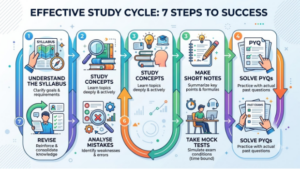
A simple preparation cycle can make the preparation more organised:
Understand the syllabus- Study concepts- Make short notes- Solve PYQs- Take mock tests- Analyse mistakes- Revise
- First, understand exactly what is included in your subject syllabus. Then study each topic from a reliable source. After completing a topic, make short notes and solve related previous year questions.
- Once you start taking tests, do not only look at your score. Check your mistakes and find the topics that need more work. Finally, revise these topics regularly.
This cycle should continue throughout your preparation.
First Understand UGC NET Exam Pattern
Before starting your preparation, understand how the UGC NET exam is structured.
| Paper | Questions | Marks | Focus |
| Paper 1 | 50 | 100 | Teaching and Research Aptitude |
| Paper 2 | 100 | 200 | Subject-specific knowledge |
| Total | 150 | 300 | Both papers |
- Each question carries 2 marks. There is no negative marking for an incorrect answer.
- Paper 1 is common for all candidates, while Paper 2 is based on the subject selected by the candidate. Both papers are compulsory.
- Understanding this pattern helps you plan your preparation. Since Paper 2 carries 200 marks, candidates should give it a major part of their study time.
Why Know the Exam Pattern First?
Knowing the pattern helps you understand where your preparation should be focused.
- For example, if you spend most of your time studying Paper 1 and leave Paper 2 for the final weeks, completing the subject syllabus can become difficult.
- The pattern also helps you practise questions in the right way. During mock tests, you should gradually learn how to manage your time across both papers.
- It also helps you decide how much time to spend on different types of questions.
Step 1: Start With Official UGC NET Syllabus
The first practical step should be downloading the official UGC NET syllabus for your subject. Do not begin by collecting random books or watching hundreds of videos. First understand what NTA and UGC expect candidates to study. Read every unit carefully and mark the topics you already know.
Then divide the syllabus into three groups:
- Strong topics: Topics you understand well.
- Average topics: Topics you know but need to revise.
- Weak topics: Topics that are new or difficult for you.
This classification helps you make a realistic study plan.
For example, if you are preparing for UGC NET History and already understand Modern Indian History, you may need less time for it than Historiography or Research Methodology.
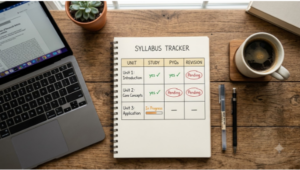
Make a Syllabus Tracker
A simple tracker can help you see your progress.
| Unit | Study | PYQs | Revision |
| Unit 1 | yes | yes | Pending |
| Unit 2 | yes | Pending | Pending |
| Unit 3 | In Progress | — | — |
Whenever you complete a topic, update the tracker. This prevents you from repeatedly studying the same topics while forgetting the unfinished ones.
Step 2: Give More Time to Paper 2
Paper 2 carries 200 marks, so it should receive a large share of your preparation time.
If you have four hours available every day, one possible division is:
| Study Area | Suggested Time |
| Paper 2 | 2–2.5 hours |
| Paper 1 | 1 hour |
| PYQs + Revision | 30–60 minutes |
You can change it according to your subject and daily routine. The important thing is that Paper 2 should not be postponed until the end.
For example, if you are preparing History, you may study one History unit in the morning and use another session for Paper 1. Later, you can solve History PYQs from the topic you studied.
Step 3: Divide Your Subject Into Small Units
A large syllabus can look difficult when you look at it as one complete list.
Instead, break it into smaller sections.
For example, a History candidate can organise preparation around:
- Ancient History
- Medieval History
- Modern History
- Indian National Movement
- Post-Independence India
- Historical Sources
- Historiography
- Research Methodology
- Culture
- Historical Concepts
You can then set a target for each section.
For example:
Monday: Early Indian History
Tuesday: Vedic period
Wednesday: Mahajanapadas
Thursday: Mauryan period
Friday: Revision + PYQs
This approach makes daily preparation easier because you know exactly what you have to complete.
Step 4: Decide What to Study First
Do not always start with the easiest topic. First check your syllabus and identify the topics that need more preparation.
You can ask yourself:
- Do I understand this topic?
- Have questions been asked from this area?
- Do I make mistakes when solving questions from it?
- How much time will I need to cover it?
If a topic is completely new, give yourself enough time to understand its basics. If you already know a topic, revise it and move towards question practice. This helps you use your study time more effectively.
Step 5: Choose Limited Study Material
One of the biggest problems in competitive exam preparation is collecting too much study material.
Candidates often download several PDFs, buy multiple books and watch lectures from different teachers for the same topic. This can create confusion. A better approach is to keep your main resources limited.
Your basic preparation material can include:
- Official syllabus
- One reliable main book
- Standard reference books
- Previous year questions
- Mock tests
- Your own short notes
If you do not understand a particular topic, use another source only for clarification.
There is no need to read five different books for every topic.
Step 6: Make Short Notes
Short notes are useful because you cannot read complete books repeatedly before the exam. Your notes should contain the information you need for quick revision.
Depending on your subject, they can include:
- Important facts
- Key concepts
- Important thinkers
- Theories
- Dates
- Books and authors
- Definitions
- Important terms
- Comparisons
- PYQ-based information
For example, if you are studying a historical movement, you can make a small table covering its causes, important leaders, major events and results. This will be much easier to revise than reading the entire chapter again.
Do Not Copy the Whole Book
Your notes should not become another textbook.If a chapter is 30 pages long, your revision notes should not also become 20 pages. Write only the points that help you remember and revise the topic quickly.
Step 7: Use Active Learning
Only reading a chapter again and again may not tell you whether you actually remember it.
After completing a topic, close your book and try to explain it in your own words.
Ask yourself:
- What did I learn?
- What are the main concepts?
- Which facts are important?
- Which part is still confusing?
- Can I answer questions from this topic?
You can also create five or ten questions yourself and answer them without looking at your notes.
Step 8: Solve UGC NET Previous Year Questions
Previous year questions are an important part of UGC NET preparation.
They help you understand how the syllabus is converted into actual examination questions.
PYQs can show you:
- The type of questions asked
- Important concepts
- Frequently tested areas
- The level of detail required
- Your weak topics
Do not wait until you finish the entire syllabus. Start solving PYQs after completing individual topics or units.
A simple approach is:
This connects your study with actual exam practice.
Step 9: Analyse Your PYQs
Do not simply solve questions and check the answer. Suppose you attempted 50 questions and got 35 correct. The 15 incorrect questions are important.
For every mistake-
Did I not know the concept?
Did I confuse two similar options?
Did I misunderstand the question?
Was it a careless mistake?
Did I guess the answer?
Once you know the reason, you can decide what to revise.
This makes PYQ practice much more useful.
Step 10: Maintain a Mistake Notebook
A mistake notebook can help you during revision. Whenever you make an important mistake, record:
Question- Correct answer- Reason for mistake- Topic to revise
- For example, if you repeatedly confuse two theories, write their main differences in your notebook. Before the exam, you can revise this notebook instead of going through all your study material again. It should contain your personal weak areas, not every question you have ever attempted.
Step 11: Follow a Regular Revision Plan
Revision should continue throughout your preparation.
If you study a topic once and do not revisit it for several weeks, you may forget important details.
A simple weekly pattern is:
Monday to Friday: New topics
Saturday: Weekly revision
Sunday: PYQs + test + mistake analysis
You can also revise a topic more than once during the preparation period.
The first revision can be short. Later revisions can focus only on difficult or important areas.
Step 12: Prepare Paper 1 Along With Paper 2
Paper 1 is common to all candidates.
It covers areas such as:
- Teaching Aptitude
- Research Aptitude
- Comprehension
- Communication
- Mathematical Reasoning
- Logical Reasoning
- Data Interpretation
- ICT
- People and Environment
- Higher Education System
Do not leave Paper 1 for the last month.
Regular practice is useful because some areas require repeated question solving.
For example, reasoning and data interpretation can improve with practice, while topics such as teaching and research aptitude may need concept revision.
Step 13: Take Mock Tests
Mock tests help you understand your preparation under exam-like conditions.
You do not need to begin with full-length tests.
Start with:
Topic test- Unit test- Sectional test- Full-length test
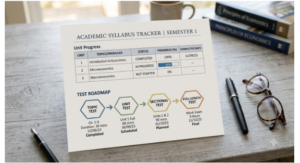
Once you have covered a good part of the syllabus, increase the number of full-length tests.
During every test, check:
- Time taken
- Accuracy
- Difficult questions
- Questions left unanswered
- Topics causing mistakes
- Repeated errors
Mock tests should be used to improve your preparation, not simply to collect scores.
Step 14: Analyse Every Mock Test
After completing a mock test, spend time analysing it.
For example:
| Result | What You Should Do |
| Correct + confident | Move ahead after quick revision |
| Correct but guessed | Revise the concept |
| Incorrect | Find and correct the mistake |
| Not attempted | Check whether the reason was time or lack of knowledge |
Suppose you scored 150 marks in one test and 165 in another.
- The score shows improvement, but the real information comes from analysing why your performance changed.
- You may find that your Paper 1 accuracy improved while your Paper 2 performance remained weak.
Step 15: Improve Time Management
Time management should be practised before the exam.
While taking mock tests, notice which questions consume too much time.
If one difficult question takes several minutes, you may lose time that could have been used for other questions.
Learn to separate questions into:
- Questions you can answer quickly
- Questions requiring some thinking
- Questions that are taking too long
You can return to difficult questions later during practice tests.
With regular timed practice, you can become more comfortable with the examination pace.
UGC NET Preparation Strategy for Working Candidates
Working candidates may not have six or eight hours every day.That does not mean they cannot prepare properly. The better approach is to create a timetable around your actual working hours.
For example:
| Time | Task |
| Morning | Paper 1 revision |
| Evening | Paper 2 study |
| Night | PYQs |
| Weekend | Mock test + analysis |
If you have only two hours on weekdays, use those hours carefully. You can use weekends for longer Paper 2 sessions, revision and full-length tests. The important thing is to maintain a routine that you can actually follow.
UGC NET Preparation Strategy for College Students
College students can gradually build their preparation instead of waiting until the final stage of their degree. Start by understanding your subject syllabus and connecting it with your academic studies.
Along with your regular studies, add:
- UGC NET syllabus tracking
- Paper 1 preparation
- PYQs
- Short notes
- Regular revision
This gives you more time to understand difficult areas.
UGC NET Preparation Strategy for Beginners
If you are preparing for UGC NET for the first time, do not try to finish everything immediately.
Follow three simple stages.
Stage 1: Build the Base
Start with the syllabus and basic concepts.
At this stage, your goal should be understanding rather than solving a very large number of questions.
Stage 2: Start Practising
Once you understand the basics, start solving PYQs and topic-wise questions.
Use your mistakes to identify topics that need more study.
Stage 3: Revision and Tests
After completing a good portion of the syllabus, increase revision and mock-test practice.
This helps you move from learning to exam preparation.
How to Choose Books for UGC NET Preparation
There is no need to buy several books for every subject.
Start with a reliable main source and add standard references where necessary.
Your study resources can include:
- Official syllabus
- Standard subject books
- Reference books
- Previous year questions
- Practice sets
- Mock tests
Different subjects need different reference books.
For example, the resources required for History will not be exactly the same as those needed for Commerce or English. Choose books that cover your syllabus properly and are easy for you to understand.
UGC NET Preparation Strategy Study Hour
There is no fixed number of study hours that works for every candidate.
A candidate preparing full-time may study for several hours, while a working candidate may have only two or three hours available.
Instead of comparing hours with other candidates, set daily targets.
For example:
Target 1: Complete one topic
Target 2: Solve 30–50 questions
Target 3: Revise yesterday’s topic
Target 4: Record important mistakes
This gives you a clear idea of what you achieved during the day.
UGC NET Preparation Strategy Daily Study Plan
A full-time candidate can use a timetable such as:
| Time | Activity |
| 8:00–10:00 AM | Paper 2 |
| 10:00–10:30 AM | Break |
| 10:30–11:30 AM | Paper 1 |
| 12:00–1:00 PM | PYQs |
| 3:00–5:00 PM | Paper 2 |
| 7:00–8:00 PM | Revision |
| 9:00–9:30 PM | Mistake notebook |
This is only a sample timetable. If you have college or work, change the timings according to your routine. The purpose of a timetable is to give structure to your preparation, not to make your day unnecessarily busy.
UGC NET Preparation Strategy Weekly Study Plan
A weekly plan helps you balance new learning with revision.
| Day | Main Focus |
| Monday | Paper 2 new topic |
| Tuesday | Paper 2 + Paper 1 |
| Wednesday | Paper 2 + PYQs |
| Thursday | Paper 2 + Paper 1 |
| Friday | Paper 2 + revision |
| Saturday | Weekly revision |
| Sunday | Mock test + analysis |
You can change the order based on your subject.
Try to keep at least one regular revision session every week.
UGC NET Preparation Strategy 3-Month
If you have around three months, divide your preparation into three broad phases.
Month 1: Build the Basics
The first month should focus on understanding the syllabus and building your subject base.
Your targets can include:
- Download the official syllabus
- Divide the syllabus into units
- Start Paper 2
- Begin Paper 1
- Make short notes
- Start topic-wise PYQs
Do not worry if your mock-test score is low at this stage.
Your main goal is to understand the topics and build a strong foundation.
Month 2: Complete the Syllabus
During the second month, focus on completing the remaining topics.
You should:
- Cover remaining Paper 2 units
- Continue Paper 1
- Solve more PYQs
- Revise completed topics
- Take sectional tests
- Identify weak areas
Try not to leave large parts of the syllabus for the final month.
Month 3: Revision and Mock Tests
The third month should focus more on revision and testing.
Spend time on:
- Short notes
- PYQs
- Full-length mock tests
- Weak topics
- Mistake notebook
- Important concepts
Avoid constantly changing your books or study sources.
At this stage, your goal should be improving accuracy and recalling what you have already studied.
UGC NET Preparation Strategy Last 30 Days
The final 30 days should be used carefully. This is not the ideal time to start several new books. Focus on revision + practice + mistake correction.
First 10 Days
- Complete pending important topics and revise areas where your preparation is weak.
- Continue solving PYQs and Paper 1 questions.
Next 10 Days
- Increase mock-test and question practice.
- Analyse every test and note repeated mistakes.
- Revise topics where your accuracy is low.
Final 10 Days
Focus mainly on:
- Short notes
- Important concepts
- PYQs
- Mistake notebook
- Weak areas
- Paper 1 revision
- Paper 2 revision
Avoid making major changes to your preparation strategy at this stage.
UGC NET Exam Do One Week Before
The final week should be focused on revision rather than heavy new learning.
Revise your short notes and important topics.
Pay attention to:
- Important concepts
- Difficult topics
- PYQs
- Important thinkers and theories
- Important facts
- Mistake notebook
- Mock-test analysis
Also check the latest official NTA instructions related to your examination.
Do not depend on old social-media posts or previous-year exam instructions when checking important exam details.
UGC NET Preparation Strategy One Day Before Exam
Do not try to complete several new chapters one day before the examination.
Keep your revision light.
You can quickly revise:
- Short notes
- Important concepts
- Frequently repeated mistakes
- Key facts
- Important formulas, where applicable
Also keep your examination documents and other required items ready according to the instructions given by NTA.
A good night’s sleep can also help you remain fresh during the examination.
UGC NET Preparation Strategy Common Mistakes Avoid
If you study without checking the syllabus, you may spend too much time on topics that are not required. Always use the official syllabus as your preparation checklist.
-
Collecting Too Many Books
-
-
- Multiple books can create confusion and increase your workload. Choose a small number of reliable sources and complete them properly.
-
-
Ignoring Paper 1
-
-
- Paper 1 contributes 100 marks to the total score. Leaving it completely until the final weeks can make preparation difficult. Give it regular study time.
-
-
Leaving Paper 2 for the End
-
-
- Paper 2 has 100 questions for 200 marks and is subject-specific. Its large syllabus requires regular preparation from the beginning.
-
-
Not Solving PYQs
-
-
- Reading theory alone does not show how well you can answer examination questions. PYQs help you connect your preparation with the actual question style.
-
-
Skipping Revision
-
-
- Without revision, you may forget information that you studied several weeks earlier. Keep weekly and monthly revision sessions in your timetable.
-
-
Taking Mock Tests Without Analysis
-
-
- A mock test is not complete when you see your score. Analyse incorrect, guessed and unattempted questions to understand your weak areas.
-
-
Following an Unrealistic Timetable
-
-
- A timetable that requires ten hours of study every day may not work for everyone. Make a plan based on your actual routine.
-
-
Changing Resources Frequently
-
-
- Changing books and teachers repeatedly can waste valuable study time. Stay with reliable resources unless there is a genuine reason to change.
-
-
Studying Only Strong Topics
-
- Strong topics can improve confidence, but weak topics may continue to reduce your overall performance. Give regular time to both.
UGC NET Preparation Strategy Important Tips
The syllabus tells you what needs to be studied. Use it as a checklist throughout your preparation.
-
Give Proper Time to Paper 2
-
-
- Paper 2 carries 200 marks, so subject preparation should remain a major part of your timetable.
-
-
Study Paper 1 Regularly
-
-
- Even a short daily session can keep Paper 1 topics active in your memory.
-
-
Solve PYQs From the Beginning
-
-
- PYQs help you understand the exam and identify important areas while you are still preparing.
-
-
Make Short Revision Notes
-
-
- Short notes save time when you revise the syllabus multiple times.
-
-
Revise Every Week
-
-
- Weekly revision reduces the chances of forgetting previously completed topics.
-
-
Take Mock Tests
-
-
- Tests help you check your speed, accuracy and preparation level.
-
-
Analyse Your Mistakes
-
-
- Every repeated mistake gives you information about what needs to be studied again.
-
-
Keep Your Resources Limited
-
-
- A few reliable sources are easier to revise than a large collection of books and PDFs.
-
-
Check Official Updates
-
- For dates, admit cards, application details and other examination-related information, always check the latest official NTA notification or notice.
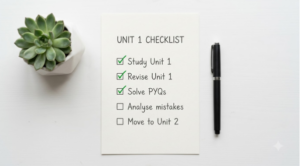
- This checklist can help you identify any important preparation area that is still pending.
A good UGC NET Preparation Strategy is based on proper planning, regular study and repeated revision. You do not need to finish the entire syllabus in a few days. Start with the official syllabus, divide it into smaller targets and complete them step by step. Give enough time to Paper 2 because it carries 200 marks, but do not ignore Paper 1. Solve PYQs while preparing instead of keeping them for the last few weeks. Use mock tests to check your speed and accuracy, and analyse your mistakes to understand what needs improvement.